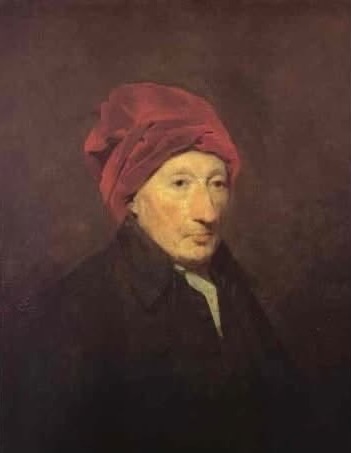
Sir Thomas Reid (1710-1796) was a Scottish philosopher. Reid believed that common sense ought to be applied to philosophical speculation.
Six Takeaways from Sir Thomas Reid
1. Extension and duration give rise to space and time.
2. Space and time are not substances but attributes.
3. Space opens to limitless immensity.
4. Time opens to eternity.
5. Space and time cannot be limited even in the imagination.
6. Eternity and immensity are attributes of God.
Quotes
“…without eyes a telescope shows nothing at all.”
“Perhaps a child in the womb, or for some short period of its existence, is merely a sentient being: the faculties, by which it perceives an external world, by which it reflects on its own thoughts, and existence, and relation to other things, as well as its reasoning and moral faculties, do possibly unfold themselves by degrees; so that it is inspired with the various principles of common sense, as with the passions of love and resentment, when it has occasion for them.”
“Thus philosophy gave way to scepticism and irony, and those systems which had been the work of ages, and the admiration of the learned, became the jest of the vulgar: for even the vulgar readily took part in the triumph over a kind of learning which they had long suspected, because it produced nothing but wrangling and altercation.”
“If a man pretends to be a sceptic with regard to the informations of sense, and yet prudently keeps out of harm's way as other men do, he must excuse my suspicion, that he either acts the hypocrite, or imposes upon himself.”
“Notwithstanding the innumerable errors committed in human education, there is hardly any education so bad, as to be worse than none.”
“When reason is properly employed, she will confirm the documents of nature, which are always true and wholesome; she will distinguish, in the documents of human education, the good from the bad, rejecting the last with modesty, and adhering to the first with reverence.”
“Arguments from analogy are always at hand, and grow up spontaneously in a fruitful imagination, while arguments that are more direct, and more conclusive, often require painful attention and application: and therefore mankind in general have been very much disposed to trust to the former.”
“Father Malebranche…held, in common with other modern philosophers, that no external thing is perceived by us immediately, but only by ideas: but he thought, that the ideas, by which we perceive an external world, are the ideas of the Deity himself, in whose mind the ideas of all things past, present, and future must have been from eternity; for the Deity, being intimately present to our minds at all times, may discover to us as much of his ideas as he sees proper, according to certain established laws of nature: and in his ideas, as in a mirror, we perceive whatever we do perceive of the external world.”
“Truth is one, but error is infinite.”
"Who can doubt, whether mankind have been universally persuaded that there is a right and a wrong in human conduct? Some things which, in certain circumstances, they ought to do, and other things which they ought not to do? The universality of these opinions, and of many such that might be named, is sufficiently evident, from the whole tenor of men's conduct, as far as our acquaintance reaches, and from the records of history, in all ages and nations, that are transmitted to us."
"When men, sitting in their closet, and consulting only their books, attempt disquisitions into nature, they may indeed tell how they would have made the world, if God had given them that in commission..."
"Attention is a voluntary act; it requires an active exertion to begin and to continue it; and it may be continued as long as we will: but consciousness is involuntary and of no continuance, changing with every thought."
"But we ought to consider, that the more closely and ingeniously men reason from false principles, the more absurdities they will be led into; and when such absurdities help to bring to light the false principles from which they are drawn, they may be the more easily forgiven."
“If the intelligence we have of external objects were to be got by reasoning only, the greatest part of men would be destitute of it; for the greatest part of men hardly ever learn to reason; and in infancy and childhood no man can reason: Therefore, as this intelligence of the objects that surround us, and from which we may receive so much benefit or harm, is equally necessary to children and to men, to the ignorant and to the learned, God in his wisdom conveys it to us in a way that puts all upon a level.”
“When we come to be instructed by Philosophers, we must bring the old light of common sense along with us, and by it judge of the new light which the Philosopher communicates to us. But when we are required to put out the old light altogether, that we may follow the new, we have reason to be on our guard.”
"As the universe is completely filled with monads, without any chasm or void, and thereby every body acts upon every other body, according to its vicinity or distance, and is mutually re-acted upon by every other body, it follows, says Leibnitz, that every monad is a kind of living mirror, which reflects the whole universe, according to its point of view, and represents the whole more or less distinctly."
"It is remarkable that Leibnitz's system, that of Malebranche, and the common system of ideas, or images of external objects in the mind, do all agree in overturning all the authority of our senses; and this one thing, as long as men retain their senses, will always make all these systems truly ridiculous."
"The Supreme Being has given us some intelligence of his works by what our senses inform us of external things, and by what our consciousness and reflection inform us concerning the operations of our own minds. Whatever can be inferred from these common informations, by just and sound reasoning, is true and legitimate philosophy; but what we add to this from conjecture is all spurious and illegitimate."
"That there can be nothing like sensation in an insentient being, or like thought in an unthinking being, is self-evident, and has been shown, to the conviction of all men that think, by Bishop Berkeley; yet this was unknown to Mr. Locke. It is an humbling consideration, that, in subjects of this kind, self-evident truths may be hid from the eyes of the most ingenious men."
“…it is beyond the power of human imagination to form any conception, whose simple ingredients have not been furnished by nature in a manner unaccountable to our understanding.”
“When pain cannot be prevented or removed, it is greatly alleviated by patience and fortitude of mind. While the mind is superior to pain, the man is not unhappy, though he may be exercised.”
“It is evident that nature intended for man, in his present state, a life of labour and toil, wherein he may be occasionally exposed to pain and danger; and the happiest man is not he who has felt least of those evils, but he whose mind is fitted to bear them by real magnanimity.”
“The Pythagoreans, however, judged very rationally, from the order and beauty of the universe, that it must be the workmanship of an eternal, intelligent, and good Being: and therefore they concluded the Deity to be one first principle or cause of the universe.”
“A man may discourse, or plead, or write, for other ends than to find the truth. His learning, and wit, and invention, may be employed, while his judgment is not at all, or very little. When it is not truth, but some other end he pursues, judgment would be an impediment, unless for discovering the means of attaining his end; and therefore it is laid aside, or employed solely for that purpose.”
“The business of an orator is said to be, to find out what is fit to persuade. This a man may do with much ingenuity, who never took the trouble to examine whether it ought to persuade or not. Let it not be thought, therefore, that a man judges of the truth of every proposition he utters, or hears uttered. In our commerce with the world, judgment is not the talent that bears the greatest price; and therefore those who are not sincere lovers of truth, lay up this talent, where it rusts and corrupts, while they carry others to market, for which there is greater demand.”
“I cannot admit, as an argument, or even as a pressing difficulty, what is grounded on the supposition that such a thing is possible, when there is no good evidence that it is possible, and, for any thing we know, it may in the nature of things be impossible.”
“In testimony a man pledges his veracity for what he affirms; so that a false testimony is a lie: but a wrong judgment is not a lie; it is only an error.”
“…every man knows the difference between a lie and an error of judgment.”
“The sceptic may perhaps persuade himself in general, that he has no ground to believe his senses or his memory: but, in particular cases that are interesting, his disbelief vanishes, and he finds himself under a necessity of believing both.”
“The proposition, that I exist, which Descartes thought the first of all truths, and the foundation of all knowledge, cannot he conceived without the conception of existence, one of the most abstract general conceptions. A man cannot believe his own existence, or the existence of any thing he sees or remembers, until he has so much judgment as to distinguish things that really exist from things which are only conceived.”
“The faculties of conception and judgment have an infancy and a maturity as man has…The first exercise of these faculties of conception and judgment is hid, like the sources of the Nile, in an unknown region.”
“A distinct notion of an object, even of sense, is never got in an instant; but the sense performs its office in an instant. Time is not required to see it better, but to analyse it, to distinguish the different parts, and their relation to one another, and to the whole...
“Hence it is, that when any vehement passion or emotion hinders the cool application of judgment, we get no distinct notion of an object, even though the sense be long directed to it. A man who is put into a panic, by thinking he sees a ghost, may stare at it long, without having any distinct notion of it; it is his understanding, and not his sense, that is disturbed by his horror. If he can lay that aside, judgment immediately enters upon its office, and examines the length and breadth, the colour, and figure, and distance of the object. Of these, while his panic lasted, he had no distinct notion, though his eyes were open all the time.”
“‘All reasoning,’ says Mr. Locke, "is search and casting about, and requires pains and application.’ It resembles the power of walking, which is acquired by use and exercise. Nature prompts to it, and has given the power of acquiring it; but we must be aided by frequent exercise before we are able to walk. After repeated efforts, much stumbling, and many falls, we learn to walk; and it is in a similar manner that we learn to reason.”
“I take it for granted, that there are self-evident principles. Nobody, I think, denies it. And if any man were so sceptical as to deny that there is any proposition that is self-evident, I see not how it would be possible to convince him by reasoning."
"1. First, I hold it to be certain, and even demonstrable, That all knowledge got by reasoning must be built upon first principles…
2. A second proposition is, That some first principles yield conclusions that are certain, others such as are probable, in various degrees, from the highest probability to the lowest...
3. A third proposition is, that it would contribute greatly to the stability of human knowledge, and consequently to the improvement of it, if the first principles upon which the various parts of it are grounded were pointed out and ascertained.”
“It is in vain to reason with a man who denies the first principles on which the reasoning is grounded. Thus, it would be in vain to attempt the proof of a proposition in Euclid to a man who denies the axioms. Indeed, we ought never to reason with men who deny first principles from obstinacy and unwillingness to yield to reason.”
“An absurdity can be entertained by men of sense no longer than it wears a mask.”
“Who can doubt whether men have universally believed the existence of a material world? Who can doubt whether men have universally believed, that every change that happens in nature must have a cause? Who can doubt whether men have universally believed, that there is a right and a wrong in human conduct; some things that merit blame, and others that are entitled to approbation?”
(Twelve First Principles)
“1. First, Then I hold as a first principle, the existence of every thing of which I am conscious…
2. Another first principle, I think, is, That the thoughts of which I am conscious, are the thoughts of a being which I call myself ',my mind, my person…
3. Another first principle I take to be, That those things did really happen which I distinctly remember…
4. Another first principle is our own personal identity and continued existence, as far back as we remember any thing distinctly…
5. Another first principle is, That those things do really exist which we distinctly perceive by our senses, and are what we perceive them to be…
6. Another first principle, I think, is, That we have some degree of power over our actions, and the determinations of our will…
7. Another first principle is, That the natural faculties, by which we distinguish truth from error, are not fallacious…
8. Another first principle relating to existence, is, That there is life and intelligence in our fellow men with whom we converse…
9. Another first principle 1 take to be, That certain features of the countenance, sounds of the voice, and gestures of the body^ indicate certain thoughts and dispositions of mind…
10. Another first principle appears to me to be, That there is a certain regard due to human testimony in matters of fact, and even to human authority in matters of opinion…
11. There are many events depending upon the will of man, in which there is a self-evident probability, greater or less, according to circumstances…
12. The last principle of contingent truths I mention, is, That, in the phenomena of nature, what is to be, will probably be like to what has been in similar circumstances.”
"A past event may be known by reasoning, but that is not remembering it. When I remember a thing distinctly, I disdain equally to hear reasons for it or against it. And so I think does every man in his senses."
"I do not at all affirm, that those I have mentioned are all the first principles from which we may reason concerning contingent truths. Such enumerations, even when made after much reflection, are seldom perfect."
“It is the dictate of our rational nature, that love and admiration are misplaced when there is no intrinsic worth in the object.”
“There are also first principles in morals. That an unjust action has more demerit than an ungenerous one: That a generous action has more merit than a merely just one: That no man ought to be blamed for what it was not in his power to hinder: That we ought not to do to others what we would think unjust or unfair to be done to us in like circumstances: These are moral axioms, and many others might be named which appear to me to have no less evidence than those of mathematics.”
"The profound speculations of ingenious men upon this subject differ so widely, as may lead us to suspect, that the line of human understanding is too short to reach the bottom of it."
“…the most simple operations of the mind cannot be logically defined.”
“…although conception may be without any degree of belief, even the smallest belief cannot be without conception. He that believes must have some conception of what he believes.”
“We know nothing that is properly in the mind but thought; and when any thing else is said to be in the mind, the expression must be figurative, and signify some kind of thought.”
“Hence, in innumerable disputes, men do not really differ in their judgments, but in the way of expressing them.”
“…it is impossible that a man should distinctly express what he has not distinctly conceived.
“A man cannot be convinced by what he does not understand.”
“What is it we call a mind? It is a thinking, intelligent, active being. Granting that thinking, intelligence, and activity, are attributes of mind, I want to know what the thing or being is to which these attributes belong? To this question I can find no satisfying answer. The attributes of mind, and particularly its operations, we know clearly; but of the thing itself we have only an obscure notion.”
“We must take a contrary road in the knowledge of God's works, and satisfy ourselves with their attributes as facts, and with the general conviction that there is a subject to which those attributes belong.”
“There may be attributes belonging to a subject, and inseparable from it, of which we have no knowledge, and consequently no conception; but this does not hinder our conceiving distinctly those of its attributes which we know.”
“The ancient philosophers called these, universals, or predicables, and endeavoured to reduce them to five classes; to wit, genus, species, specific difference, properties, and accidents.”
“We are indeed in most cases very imperfect judges of what may be. But this we know, that were we ever so certain that a thing may be, this is no good reason for believing that it really is. A may be is a mere hypothesis, which may furnish matter of investigation, but is not entitled to the least degree of belief.”
"That some moral and philosophical truths there are so evident in themselves, that it would be easier to imagine half mankind run mad, and joined precisely in the same species of folly, than to admit any thing as truth, which should be advanced against such natural knowledge, fundamental reason, and common sense. And, on taking leave, he adds: 'And now, my friend, should you find I had moralised in any tolerable manner, according to common sense, and without canting, I should be satisfied with my performance.'"
Lord Shaftesbury.
"Because common sense is a sufficient guard against many errors in religion, it seems to have been taken for granted, that common sense is a sufficient instructor also, whereas in fact, without positive instruction, men would naturally have been mere savages with respect to religion; as, without similar instruction, they would be savages with respect to the arts of life and the sciences. Common sense can only be compared to a judge; but what can a judge do without evidence and proper materials from which to form a judgment?"
Joseph Priestley
“When reason is against a man, a man will be against reason.”
Thomas Hobbes
“We ascribe to reason two offices, or two degrees. The first is to judge of things self-evident; the second to draw conclusions that are not self-evident from those that are…
The first is purely the gift of Heaven. And where Heaven has not given it, no education can supply the want. The second is learned by practice and rules, when the first is not wanting. A man who has common sense may be taught to reason. But if he has not that gift, no teaching will make him able either to judge of first principles or to reason from them.”
“Every proposition is either true or false: so is every judgment. A proposition may be simply conceived without judging of it. But when there is not only a conception of the proposition, but a mental affirmation or negation, an assent or dissent of the understanding, whether weak or strong, that is judgment.”
“…intelligence, wisdom, and other mental qualities in the cause, may be inferred from their marks or signs in the effect.”
"Can any thing done by chance have all the marks of design? Four dice may by chance turn up four aces; but do you think that four hundred dice, thrown by chance, will turn up four hundred aces? Colours thrown upon canvas without design may have some similitude to a human face; but do you think they might make as beautiful a picture as that of the Coan Venus? A hog turning up the ground with his nose may make something of the form of the letter A; but do you think that a hog might describe on the ground the Andromache of Ennius? Carneades imagined that in the stone quarries at Chios he found, in a stone that was split, a representation of the head of a little Pan, or sylvan deity. I believe he might find a figure not unlike; but surely not such an one as you would say had been formed by an excellent sculptor like Scopas. For so, verily, the case is, that chance never perfectly imitates design."
Cicero (lib.1, cap.13, De divinutione)
“The clear marks and signatures of wisdom, power, and goodness, in the constitution and government of the world, is of all arguments that have been advanced for the being and providence of the Deity, that which in all ages has made the strongest impression upon candid and thinking minds; an argument which has this peculiar advantage, that it gathers strength as human knowledge advances, and is more convincing at present than it was some centuries ago.”
“The argument from final causes, when reduced to a syllogism, has these two premises: First, That design and intelligence in the cause, may, with certainty, be inferred from marks or signs of it in the effect. This is the principle we have been considering, and we may call it the major proposition of the argument. The second,which we call the minor proposition, is, That there are in fact the clearest marks of design and wisdom in the works of nature; and the conclusion is, that the works of nature are the effects of a wise and intelligent cause. One must either assent to the conclusion, or deny one or other of the premises.”
"Of all objects of contemplation, the Supreme Being is the most grand. His eternity, his immensity, his irresistible power, his infinite knowledge and unerring wisdom, his inflexible justice and rectitude, his supreme government, conducting all the movements of this vast universe to the noblest ends, and in the wisest manner, are objects which fill the utmost capacity of the soul, and reach far beyond its comprehension...
The emotion which this grandest of all objects raises in the human mind, is what we call devotion; a serious recollected temper, which inspires magnanimity, and disposes to the most heroic acts of virtue."
"Upon the whole, I humbly apprehend, that true grandeur is such a degree of excellence as is fit to raise an enthusiastical admiration; that this grandeur is found originally and properly in qualities of mind; that it is discerned in objects of sense only by reflection, as the light we perceive in the moon and planets is truly the light of the sun; and that those who look for grandeur in mere matter, seek the living among the dead."
"There may be, and probably are, many necessary connexions of things in nature, which we are too dimsighted to discover."
"It seems contrary to reason, to attribute to chance or accident, what is subject to rules, even though there may be exceptions to the rule."
“Do not the ideas of demonstration, of probability, our ideas of a syllogism, of major, minor and conclusion, of an enthymeme, dilemma, sorites, and all the various modes of reasoning, take their rise from the faculty of reason?”
“Nature is the name we give to the efficient cause of innumerable effects which fall daily under our observation. But if it be asked what nature is ?—whether the first universal cause, or a subordinate one, whether one or many, whether intelligent or unintelligent ?—upon these points we find various conjectures and theories, but no solid ground upon which we can rest; and I apprehend the wisest men are they who are sensible that they know nothing of the matter...
From the course of events in the natural world, we have sufficient reason to conclude the existence of an eternal intelligent First Cause. But whether he acts immediately in the production of those events, or by subordinate intelligent agents, or by instruments that are unintelligent, and what the number, the nature, and the different offices of those agents or instruments may be; these I apprehend to be mysteries placed beyond the limits of human knowledge. We see an established order in the succession of natural events, but we see not the bond that connects them together.”
“…let us next attend to the moral, I mean, to human actions and conduct.”
“…power that cannot be exerted is no power.”
"The general rules of imputation are self-evident. They have been the same in all ages, and among all civilized nations. No man blames another for being black or fair, for having a fever or the falling sickness; because these things are believed not to be in his power; and they are believed not to be in his power, because they depend not upon his will. We can never conceive that a man's duty goes beyond his power, or that his power goes beyond what depends upon his will."
"The origin of many of our conceptions, and even of many of our judgments, is not so easily traced as philosophers have generally conceived."
"It seems, therefore, to me most probable, that such beings only as have some degree of understanding and will, can possess active power: and that inanimate beings must be merely passive, and have no real activity."
"While we are very much in the dark with regard to the real agents or causes which produce the phenomena of Nature, and have, at the same time, an avidity to know them, ingenious men frame conjectures, which those of weaker understanding take for truth. The fare is coarse, but appetite makes it go down."
"The whole object of natural philosophy, as Newton expressly teaches, is reducible to these two heads: first, by just induction from experiment and observation, to discover the laws of Nature, and then to apply those laws to the solution of the phenomena of Nature. This was all that this great philosopher attempted, and all that he thought attainable."
"The laws of nature are the rules according to which the effects are produced; but there must be a cause which operates according to these rules. The rules of navigation never navigated a ship. The rules of architecture never built a house."
"...to call a person to account, to approve or disapprove of his conduct, who had no power to do good or ill, is absurd."
"Nothing appears more evident to our reason, than that there must be an efficient cause of every change that happens in nature. But when I attempt to comprehend the manner in which an efficient cause operates, either upon body or upon mind, there is a darkness which my faculties are not able to penetrate."
"His animal faculties are sufficient for the preservation of the species; they grow up of themselves, like the trees of the forest, which require only the force of nature and the influences of heaven... His rational and moral faculties, like the earth itself, are rude and barren by nature, but capable of a high degree of culture; and this culture he must receive from parents, from instructors, from those with whom he lives in society, joined with his own industry."
“The man who is incapable of perceiving the obligation of virtue, when he uses his best judgment, is a man in name, but not in reality.”
“It appears, I think, from what has been said, that the attention we give to objects is for the most part voluntary; that a great part of wisdom and virtue consists in giving a proper direction to our attention; and that however reasonable this appears to the judgment of every man, yet, in some cases, it requires an effort of self-command no less than the most heroic virtues.”
“The Roman law defined justice, a steady and perpetual will to give to every man his due.”
“Fickleness, inconstancy, facility, on the one hand; wilfulness, inflexibility, and obstinacy, on the other, are moral qualities, respecting our purposes, which every one sees to be wrong. A manly firmness, grounded upon rational conviction, is the proper mean which every man approves and reveres.”
“Man has, not without reason, been called an epitome of the universe. His body, by which his mind is greatly affected, being a part of the material system, is subject to all the laws of inanimate matter. During some part of his existence, his state is very like that of a vegetable. He rises, by imperceptible degrees, to the animal, and, at last, to the rational life, and has the principles that belong to all.”
“Man would never acquire the use of reason if he were not brought up in the society of reasonable creatures.”
"Every appetite is accompanied with an uneasy sensation proper to it, which is strong or weak, in proportion to the desire we have of the object. Secondly. Appetites are not constant, but periodical, being sated by their objects for a time, and returning after certain periods."
"To act merely from appetite is neither good nor ill in a moral view. It is neither an object of praise nor of blame. No man claims any praise because he eats when he is hungry, or rests when he is weary. On the other hand, he is no object of blame, if he obeys the call of appetite when there is no reason to hinder him. In this, he acts agreeably to his nature."
"When a man has neither hope, nor fear, nor desire, nor project, nor employment, of body or mind, one might be apt to think him the happiest mortal upon earth, having nothing to do but to enjoy himself: but we find him, in fact, the most unhappy."
"Society among men could not subsist without a certain degree of that regularity of conduct which virtue prescribes. To this regularity of conduct, men who have no virtue are induced by a regard to character, sometimes by a regard to interest."
"The joy and comfort of human life consists in the reciprocal exercise of kind affections, and without them life would be undesirable."
"On this account I consider those affections only as benevolent, where the good of the object is desired ultimately, and not as the means only, in order to something else."
"...appetites are necessary for the preservation of the individual. Benevolent affections are no less necessary for the preservation of society among men, without which man would become an easy prey to the beasts of the field."
“The security, the happiness, and the strength of human society, spring solely from the reciprocal benevolent affectionsof its members.”
“In the most ancient philosophy, of which we have any account, I mean that of the Pythagorean school, the mind of man was compared to a state or commonwealth, in which there are various powers, some that ought to govern, and others that ought to be subordinate. The good of the whole, which is the supreme law in this, as in every commonwealth, requires that this subordination be preserved, and that the governing powers have always the ascendant over the appetites and the passions. All wise and good conduct consists in this. All folly and vice in the prevalence of passion over the dictates of reason.”
“(1) There is no disposition more comfortable to the person himself, or more agreeable to others, than good humour. (2) It is to the mind, what good health is to the body, putting a man in the capacity of enjoying every thing that is agreeable in life, and of using every faculty without clog or impediment. (3) It disposes to contentment with our lot, (4) to benevolence to all men, (5) to sympathy with the distressed. (6) It presents every object in the most favourable light, and (7) disposes us to avoid giving or taking offence.”
“The end of government is to make the society happy, which can only be done by making it good and virtuous.”
“Our cordial love and esteem is due only to the man whose soul is not contracted within itself, but embraces a more extensive object: who loves virtue, not for her dowry only, but for her own sake: whose benevolence is not selfish, but generous and disinterested: who, forgetful of himself, has the common good at heart, not as the means only, but as the end: who abhors what is base, though he were to be a gainer by it, and loves that which is right, although he should suffer by it.”
“A man is prudent when he consults his real interest, but he cannot be virtuous, if he has no regard to duty.”
“I presume it will be granted, that in every man of real worth, there is a principle of honour, a regard to what is honourable or dishonourable, very distinct from a regard to his interest. It is folly in a man to disregard his interest, but to do what is dishonourable is baseness. The first may move our pity, or, in some cases, our contempt, but the last provokes our indignation.”
"Those," says he, "who have denied the reality of moral distinctions, may be ranked among the disingenuous disputants (who really do not believe the opinions they defend, but engage in the controversy, from affectation, from a spirit of opposition, or from a desire of showing wit and ingenuity superior to the rest of mankind); nor is it conceivable that any human creature could ever seriously believe that all characters and actions were alike entitled to the regard and affection of every one.”
David Hume
“The person obliged must have understanding and will, and some degree of active power. He must not only have the natural faculty of understanding, but the means of knowing his obligation. An invincible ignorance of this destroys all moral obligation.”
“To reason about justice with a man who sees nothing to be just or unjust; or about benevolence with a man who sees nothing in benevolence preferable to malice, is like reasoning with a blind man about colour, or with a deaf man about sound.”
"Yet these things which add so much to its appearance, add but little to its real value."
“There is no judgment of the heart of man more clear or more irresistible than this,—that esteem and regard are really due to good conduct, and the contrary to base and unworthy conduct. Nor can we conceive a greater depravity in the heart of man, than it would be to see and acknowledge worth without feeling any respect to it; or to see and acknowledge the highest worthlessness without any degree of dislike and indignation.”
“Self-esteem, grounded upon external advantages, or the gifts of fortune, is pride. When it is grounded upon a vain conceit of inward worth which we do not possess, it is arrogance and self-deceit. But when a man, without thinking of himself more highly than he ought to think, is conscious of that integrity of heart and uprightness of conduct, which he most highly esteems in others, and values himself duly upon this account; this perhaps may be called the pride of virtue, but it is not a vicious pride. It is a noble and magnanimous disposition, without which there can be no steady virtue.”
“For no man can bear the thought of being absolutely destitute of all worth. The consciousness of this would make him detest himself, hate the light of the sun, and fly, if possible, out of existence.”
“I would be extremely absurd, from the errors and ignorance of mankind, to conclude (1) that there is no such thing as truth; or (2) that man has not a natural faculty of discerning it, and distinguishing it from error.”
“We must not therefore think, because man has the natural power of discerning what is right and what is wrong, that he has no need of instruction; that this power has no need of cultivation and improvement; that he may safely rely upon the suggestions of his mind, or upon opinions he has got, he knows not how.”
“The man who neglects the means of improvement in the knowledge of his duty, may do very bad things, while he follows the light of his mind.”
“Truth has an affinity with the human understanding, which error has not. And right principles of conduct have an affinity with a candid mind, which wrong principles have not.”
“Conscience prescribes measures to every appetite, affection, and passion, and says to every other principle of action, so far thou mayest go, but no farther. We may indeed transgress its dictates, but we cannot transgress them with innocence, nor even with impunity.”
“All our reasonings in morals, in natural jurisprudence, in the law of nations, as well as our reasonings about the duties of natural religion, and about the moral government of the Deity, must be grounded upon the dictates of our moral faculty, as first principles.”
“The weakness of human reason makes men prone, when they leave one extreme, to rush into the opposite; and thus philosophy, even in its infancy, may lead men from idolatry and polytheism into atheism, and from ascribing active power to inanimate beings, to conclude all things to be carried on by necessity.”
“But, as to the real causes of the phenomena of nature, how little do we know! all our knowledge of things external, must be grounded upon the information of our senses; but causation and active power are not objects of sense; nor is that always the cause of a phenomenon which is prior to it, and constantly conjoined with it; otherwise night would be the cause of day, and day the cause of the following night.”
“This confusion of various things under the name of causes, is the more easily tolerated, because however hurtful it may be to sound philosophy, it has little influence upon the concerns of life.”
“Those philosophers seem to have had the justest views of nature, as well as of the weakness of human understanding, who, giving up the pretence of discovering the causes of the operations of nature, have applied themselves to discover, by observation and experiment, the rules, or laws of nature according to which the phenomena of nature are produced.”
“But those of juster discernment see, that laws of nature are not agents. They are not endowed with active power, and therefore cannot be causes in the proper sense. They are only the rules according to which the unknown cause acts.”
“To be subject to necessity is to have no power at all; for power and necessity are opposites.”
“…understanding and will, without some degree of active power, can produce no effect.”
“Let us next consider the nature of moral government. This is the government of persons who have reason and active power, and have laws prescribed to them for their conduct, by a legislator. Their obedience is obedience in the proper sense; it must therefore be their own act and deed, and consequently they must have power to obey or to disobey. To prescribe laws to them which they have not power to obey, or to require a service beyond their power, would be tyranny and injustice in the highest degree.”
“What connexion there may be, in the nature of things, between reason and active power, we know not. But we see evidently, that, as reason without active power can do nothing, so active power without reason has no guide to direct it to any end... These two conjoined make moral liberty, which, in how small a degree soever it is possessed, raises man to a superior rank in the creation of God. He is not merely a tool in the hand of the master, but a servant, in the proper sense, who has a certain trust, and is accountable for the discharge of it. Within the sphere of his power, he has a subordinate dominion or government, and therefore may be said to be made after theimage of God, the Supreme Governor.”
“That no man can be under a moral obligation to do what it is impossible for him to do, or to forbear what is impossible for him to forbear, is an axiom as self-evident as any in mathematics.”
“The effects we observe in the course of nature require a cause. Effects wisely adapted to an end, require a wise cause. Every indication of the wisdom of the Creator is equally an indication of his power. His wisdom appears only in the works done by his power; for wisdom without power may speculate, but it cannot act: it may plan, but it cannot execute its plans.”
“If we can believe, that an extensive series of means may conspire to promote an end without a cause that intended the end, and had power to choose and apply those means for the purpose, we may as well believe that this world was made by a fortuitous concourse of atoms, without an intelligent and powerful cause.”
“The First Cause gives us evidence of his power by every effect that gives us evidence of his wisdom. And, if he is pleased to communicate to the work of his hands some degree of his wisdom, no reason can be assigned why he may not communicate some degree of his power, as the talent which wisdom is to employ.”
“We have no authority to pray that God would counteract or suspend the laws of nature in our behalf. Prayer, therefore, supposes that he may lend an ear to our prayers, without transgressing the laws of nature. Some have thought, that the only use of prayer and devotion is, to produce a proper temper and disposition in ourselves, and that it has no efficacy with the Deity. But this is a hypothesis without proof. It contradicts our most natural sentiments, as well as the plain doctrine of Scripture, and tends to damp the fervour of every act of devotion.”
“Why may not an efficient cause be defined to be a being that had power and will to produce the effect? The production of an effect requires active power, and active power, being a quality, must be in a being endowed with that power. Power, without will, produces no effect; but, where these are conjoined, the effect must be produced.”
“If it be asked, Why does God permit so much sin in his creation? I confess I cannot answer the question, but, must lay my hand upon my mouth. He giveth no account of his conduct to the children of men. It is our part to obey his commands, and not to say unto him, Why dost thou thus?”
“Extremes of all kinds ought to be avoided; yet men are prone to run into them; and, to shun one extreme, we often run into the contrary.”
“If a man can be induced to do his duty even from a regard to his own happiness, he will soon find reason to love virtue for her own sake, and to act from motives less mercenary.”
“Man only, of the inhabitants of this world, is made capable of observing his own constitution, what kind of life it is made for, and of acting according to that intention, or contrary to it. He only is capable of yielding an intentional obedience to the dictates of his nature, or of rebelling against them.”
“It is not want of judgment, but want of candour and impartiality, that hinders men from discerning what they owe to others. They are quicksighted enough in discerning what is due to themselves. When they are injured, or ill treated, they see it, and feel resentment. It is the want of candour that makes men use one measure for the duty they owe to others, and another measure for the duty that others owe to them in like circumstances.”