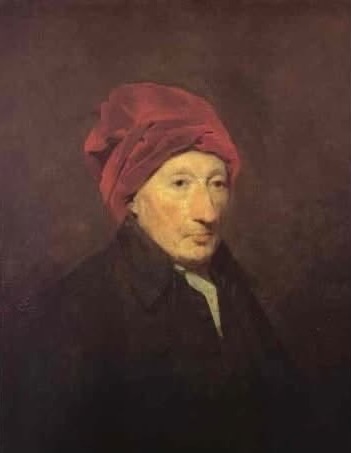
Sir Thomas Reid (1710-1796) was a Scottish philosopher. Reid believed that common sense ought to be applied to philosophical speculation.
Quotes
Inveniam viam aut faciam.
“May I find a way or make one.”
Francis Bacon.
Nullam rem e nihilo gigni divinitus unquam.
“No thing is ever divinely brought into being out of nothing.”
Lucretius, De Rerum Natura 1.150
De nihilo nihil,
in nihilum nil posse reverti. “From nothing, nothing;
Into nothing, nothing can turn back.”
Aulus Persius Flaccus, (34–62 AD). Impossibile est cujus nullam notionem formare possumus; possibile e contra, cui aliqua respondet notio. "The impossible is what we can form no notion of. The possible, on the contrary, is something to which some notion corresponds."
Christian Wolff, Ontologia, 1730.
Quicquid agunt homines,
votum, timor, ira, voluptas, gaudia, discursus,
nostri farrago libelli est. “Whatever humans do —
promise, fear, rage, pleasure, joys, pursuits —
is the mishmash of our little book.”
Juvenal, Satires 1.85–86
Hoc non est dividere, sed frangere rem “This is not to divide but to break a thing.”
Cicero
chaos rudis indigestaque moles
“Chaos is a rude and undigested mass.”
Ovid’s Metamorphoses (1.7) …natura judicia, judicia conmunibus hominum sensibus infixa “…judgments by nature, judgments deeply rooted in common human senses.”
Cicero
Num chimaera bombinans in vacuo possit comedere secundas intentiones “Can a chimera buzzing in a vacuum eat second intentions?”
John of Cornwall
effectuum naturalium ejusdem generis easdem esse causas. “Natural effects of the same kind have the same causes.”
Sir Isaac Newton
Nil turpius physico quam fieri sine causa quoquam dicere “Nothing is worse to a student of nature than to say something happens without a cause.”
Cicero
Felix qui potuit rerum cognoscere causas “Happy is one who could know causes of things.”
Virgil, Georgics 2.490
In necessariis unitas, in non-necessariis libertas, in utrisque caritas. “Unity in necessities, liberty in non-necessities, charity in both.”
Rupertus Meldenius (Paraenesis votiv, 1627)
Ecce spectaculum Deo dignum, ad quod respiciat Jupiter suo operi intentus, vir fortis cum mala fortuna compositus. “Look! A spectacle worthy of God, to which Jupiter, intent on his work, might pay attention: a mighty man pitted against bad fortune.”
Seneca, De Providentia 2.9
Silent enim leges inter arma. “For laws fall silent amidst warfare.”
Cicero (Pro Milone 11)
Ut venustas et pulchriludo corporis secerni non potest a valitudine. “Grace and beauty of body cannot be separated from health.”
Cicero, De Officiis 1.27.95
Et si quando in experiundo postea reperiatur aliquid, quod a parte contraria faciat; tum demum, non sine istis exceptionibus affirmetur conclusio opportebit. “And if afterward something should be found by experiment which makes for the contrary side, then will it be necessary that the conclusion be affirmed with these exceptions.”
Sir Isaac Newton
Sumite materiam vestris, qui scribitis, aequam viribus, et versate diu quid ferre recusent, quid valeant humeri. “Take up material, you who write, equal to your abilities, and consider at length what the shoulders refuse to carry and what they have strength to carry.”
Horace, Ars Poetica 39–40
Hominem huc et illuc rapiunt. “They drag a man this way and that.
Cicero
…quibus agitatur mens et bruto quodam impetu fertur. “…by which the mind is agitated and carried along by some brute impulse.”
Dr. (Francis) Hutcheson (1694-1746)
Duplex enim est vis animorum atque naturae una pars in appetitu posita est, quae est ὁρμή Graece, quae hominem huc et illuc rapit; altera in ratione, quae docet, et explanat, quid faciendum fugiendumve sit; ita fit ut ratio praesit, appetitus obtemperet. “For the power of souls and of nature is two-fold: one part is placed in appetite, which is ὁρμή in Greek, which drags a man this way and that; the other in reason, which teaches and explains what needs to be done or to be avoided; thus it happens that reason presides, appetite complies.”
Cicero
Oportet discentem credere "The learner ought to believe"
(Traditional Aphorism)
Oderint dum metuunt. “Let them hate, as long as they fear.”
Lucius Accius (c. 170–c. 86 BC, as quoted by Thomas Reid, with textual variation).
Nemo me impune lacesset. “No one will attack me unpunished.”
(Traditional Motto of Scotland's Order of the Thistle)
Manet sub Jove frigido
Venator, tenerae conjugis immemor;
Seu visa est catulis cerva fidelibus
Seu rupit teretes Marsus aper plagas. “The hunter remains under a frigid sky,
Unmindful of a tender wife,
Whether a deer has been seen by faithful dogs
Or a Marsian boar has torn finely-twisted nets.”
Horace, Odes 1.1.25–28
caecae cupidines “…blind longings.”
(Sir Thomas Reid)
Sed inter hominem et belluam hoc maxime interest, quod haec tantum quantum sensu movetur, ad id solum quod adest, quodque praesens est se accommodat, paululum admodum sentiens praeteritum aut futurum: homo autem quoniam rationis est particeps, per quam consequentia cernit, causas rerum videt, earumque praegressus et quasi antecessiones non ignorat: similitudines comparat, et rebus praesentibus adjungit atque annectit futuras; facile totius vitae cursum videt, ad eamque degendam preparat res necessarias. “Yet between a human and a beast there is especially this difference: that so far as the beast is moved by sense, it accommodates itself only to that which is at hand and that which is present, sensing quite little of past or future; but a human, because she is a partaker of reason, through which she discerns consequences, sees the causes of things, and is not ignorant of their preceding developments and, as it were, antecedents; she compares likenesses, and joins together and attaches future things to present things. She sees easily the course of an entire life, and prepares things necessary for it to be lived.”
Cicero, De officiis I.4.11 (Book I, section 4, paragraph 11)
Pauci dignoscere possunt vera bona, remota erroris nebula. “Few can discern true goods, even when the cloud of error is removed.”
Juvenal, Satires, X.1–4
Quibus ex rebus conflatur et efficitur id, quod quaerimus, honestum, quod etiamsi nobilitatum non sit, tamen honestum sit, quodque vere dicimus, etiamsi a nullo laudetur, natura esse laudabile. "From these things is molded and made that moral good which we seek, which even if it is not celebrated, is nevertheless moral good, and which we truly say is by nature praiseworthy, even if praised by no one."
Cicero, De Officiis I.4.14.
Id quod cur factum sit ratio probabilis reddi potest. "...that for which a probable reason why it was done can be given."
Cicero, De Officiis I.3.8. (Reid uses potest, rather than Cicero's possit)
sensus recti et honesti "...a sense of what is right and honorable."
(Quotation by Reid)
Itaque non sic causa intelligi debet, ut quod cuique antecedat, id et causa sit, sed quod cuique efficienter antecedit. “And so a cause ought not to be understood thus, as if whatever comes before, that is also the cause, but rather whatever efficiently comes before.”
Cicero, De Fato XV.34 (as quoted by Thomas Reid, with textual variations).
ens rationis “...an entity of reason.”
(Axiom quoted by Thomas Reid)
jus quaesitum “...an acquired right.”
(Axiom quoted by Thomas Reid)
petitio principii “...begging the question.”
(Axiom quoted by Thomas Reid)
ignoratio elenchi “...an irrelevant conclusion”
(Axiom quoted by Thomas Reid)
Quocirca nullo modo cogimur, aut retenta praescientia Dei tollere voluntatis arbitrium, aut retento voluntatis arbitrio, Deum, quod nefas est, negare praescium futurorum: sed utrumque amplectimur, utrumque fideliter et veraciter confitemur: illud ut bene credamus; hoc ut bene vivamus. ““Therefore, we are in no way compelled either by retaining God’s foreknowledge to take away freedom of the will, or by retaining freedom of the will to deny God foreknowledge of future events, which is impious: yet we embrace both and confess both faithfully and truly: the former that we may believe well; the latter that we may live well.”"
St. Augustine
scientia media "Middle knowledge."
(Axiom quoted by Sir Thomas Reid)