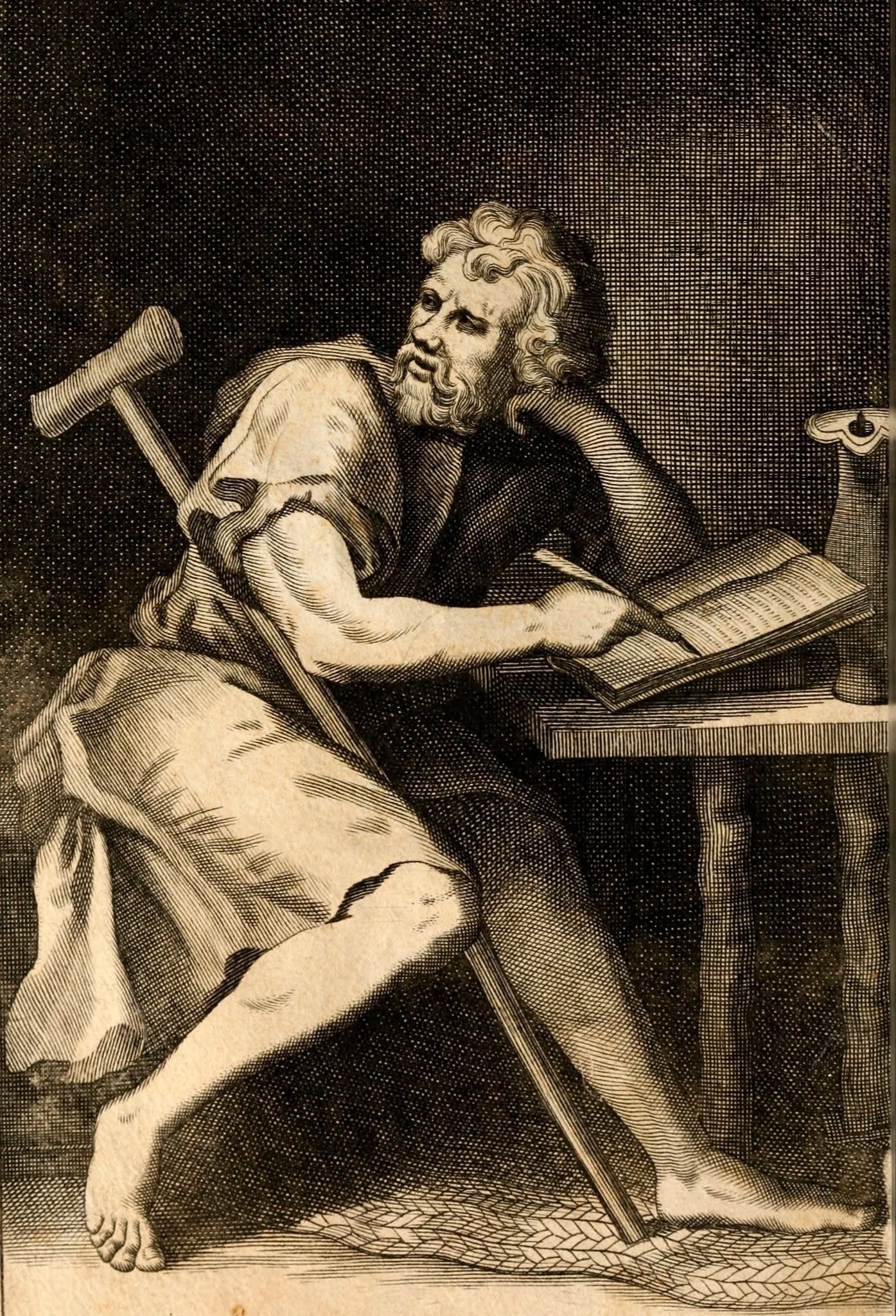
Excerpts from The Golden Sayings of Epictetus The Harvard Classics,
Volume 2
Epictetus, whose name means "Acquired" or "Inherited", was born a slave in 50 AD, in Hieropolis, Phrygia, Roman Empire (in present day Turkey). He was taken to Rome as a child by his owner, who himself was a freed slave. The boy's owner served as a Secretary to the Emperor Nero.
Epictetus gained his freedom in 68 AD, and lived in Rome until 93 AD. In that year, he was banished from the city along with all other philosophers by Emperor Domitian. He spent the rest of his life in Nicopolis, Greece, also Roman Empire, where he died in 135 AD.
Epictetus lived a life of great simplicity,
and is one of the pioneering philosophers of freedom.
"What they can do, we will not regard: what does concern us, that they cannot do. Who then shall rule one that is thus minded?"
8595
"You must know that it is no easy thing for a principle to become a man's own, unless each day he maintain it and hear it maintained, as well as work it out in life."
8669
"...wherever a man is against his will, that to him is prison."
8678
"When we are invited to a banquet, we take what is set before us; and were one to call upon his host to set fish upon the table or sweet things, he would be deemed absurd. Yet in a word, we ask the Gods for what they do not give..."
8698
"What you shun enduring yourself, attempt not to impose on others. You shun slavery—beware of enslaving others! If you can endure to do that, one would think you had been once upon a time a slave yourself. For Vice has nothing in common with virtue, nor Freedom with slavery."
8783
"Wouldst thou have men speak good of thee? speak good of them. And when thou hast learned to speak good of them, try to do good unto them, and thus thou wilt reap in return their speaking good of thee."
8790
"Give thyself more diligently to reflection: know thyself: take counsel with the Godhead: without God put thine hand unto nothing."
9283
"...what deserves your attention most is the last thing to gain it."
9318
"Reflect that the chief source of all evils to Man, and of baseness and cowardice, is not death, but the fear of death. Against this fear then, I pray you, harden yourself; to this let all your reasonings, your exercises, your reading tend. Then shall you know that thus alone are men set free."
9404
"I am free, I am a friend of God, ready to render Him willing obedience. Of all else I may set store by nothing—neither by mine own body, nor possessions, nor office, nor good report, nor, in a word, aught else beside."
9473
"Remember that not the love of power and wealth sets us under the heel of others, but even the love of tranquillity, of leisure, of change of scene—of learning in general, it matters not what the outward thing may be—to set store by it is to place thyself in subjection to another."
9481
"And if thy reading secures thee not serenity, what profits it?"
9481
"If you seek Truth, you will not seek to gain a victory by every possible means; and when you have found Truth, you need not fear being defeated."
9508
"What foolish talk is this? how can I any longer lay claim to right principles, if I am not content with being what I am, but am all aflutter about what I am supposed to be?"
9511
"If you are told that such an one speaks ill of you, make no defence against what was said, but answer, He surely knew not my other faults, else he would not have mentioned these only."
9608
"Asked, Who is the rich man? Epictetus replied, 'He who is content.'"
9672